

AppZen Evolve Chicago 2026 was our largest customer event to date and the first to run across three days. The agenda included a Customer Advisory Board meeting, two product launches, deep-dive presentations, a customer panel and fireside chat, hands-on workshops, a curated night out in the city, and seven customer awards. What started as AppZen on Tour has evolved into an industry-leading gathering of finance leaders, prospects, and partners dedicated to autonomous finance, with our AI agents resolving tasks in their organizations.
Here is what mattered most to our attendees, and where Evolve is headed next.
CEO Anant Kale described the work finance no longer has to do, thanks to our AI Agents
Anant opened the event by drawing the through-line for every session that followed. “AI is advisory. It gives you summaries. It predicts. It gives you recommendations,” he said. “Agents are operational. They know the task. They know how to get there. They know the controls, the rules. And the job is to get the task done.”
The shift from assistive AI that advises to authoritative AI that acts is now measurable. Since we first introduced our AI Agents in November 2025, they have performed more than 4.5 million actions across accounts payable, expense audits, and corporate cards, and returned more than 300,000 hours to finance teams. “Every number that you see out here is a piece of work that was in somebody’s queue, in somebody’s spreadsheet, in somebody’s inbox,” Anant said.
Cost predictability drew nods from attendees. Open-ended token billing is a blank check, so we define each Agent in a standard operating procedure (SOP) with a fixed cost per run, even when the model underneath makes more calls. Before scaling any of our Agents, we confirm what job it will do, how much it will cost, and what value it will return.
The biggest news in the keynote was reach. The AI Agent Studio now lets our Agents work outside AppZen under the same SOP governance. Agents can read the analytics tools your team already uses; open documents in SharePoint or Box through Model Context Protocol (MCP) connections; run web research; send email, Slack, or Teams messages; place phone calls; and log in to systems such as SAP Ariba, Coupa, and SAP Concur to finish the swivel-chair steps an API call cannot complete. And they do it all with governance and a full audit trail.
Solutions Consultant Brendan Block made that concrete with a live accounts payable demo. An Agent read a service contract in SharePoint, totaled every prior invoice from the supplier, checked the contract’s inflation clause against the Bureau of Labor Statistics, and recalculated the tiered price. It caught $13,878 of over-billing on a 1,000-visit invoice that looked correct on its face. “The invoice doesn’t contain the answer,” Brendan said. “The answer is in everything you already paid.”
Anant previewed all of our exciting launches and latest developments, and closed with this: “The agent-first shift means that humans are no longer the default. Humans are no longer the place where the work goes first.” So what work should remain with people, and what should be handed to agents? he asked. We explored those questions in depth throughout the event.
CTO Kunal Verma outlined the launches moving autonomous finance forward
CTO and co-founder Kunal Verma detailed the operating model behind the hybrid finance team that Anant had announced. “As we move to a hybrid workforce, people will set the boundaries,” he said. “And agents will do most of the work.”
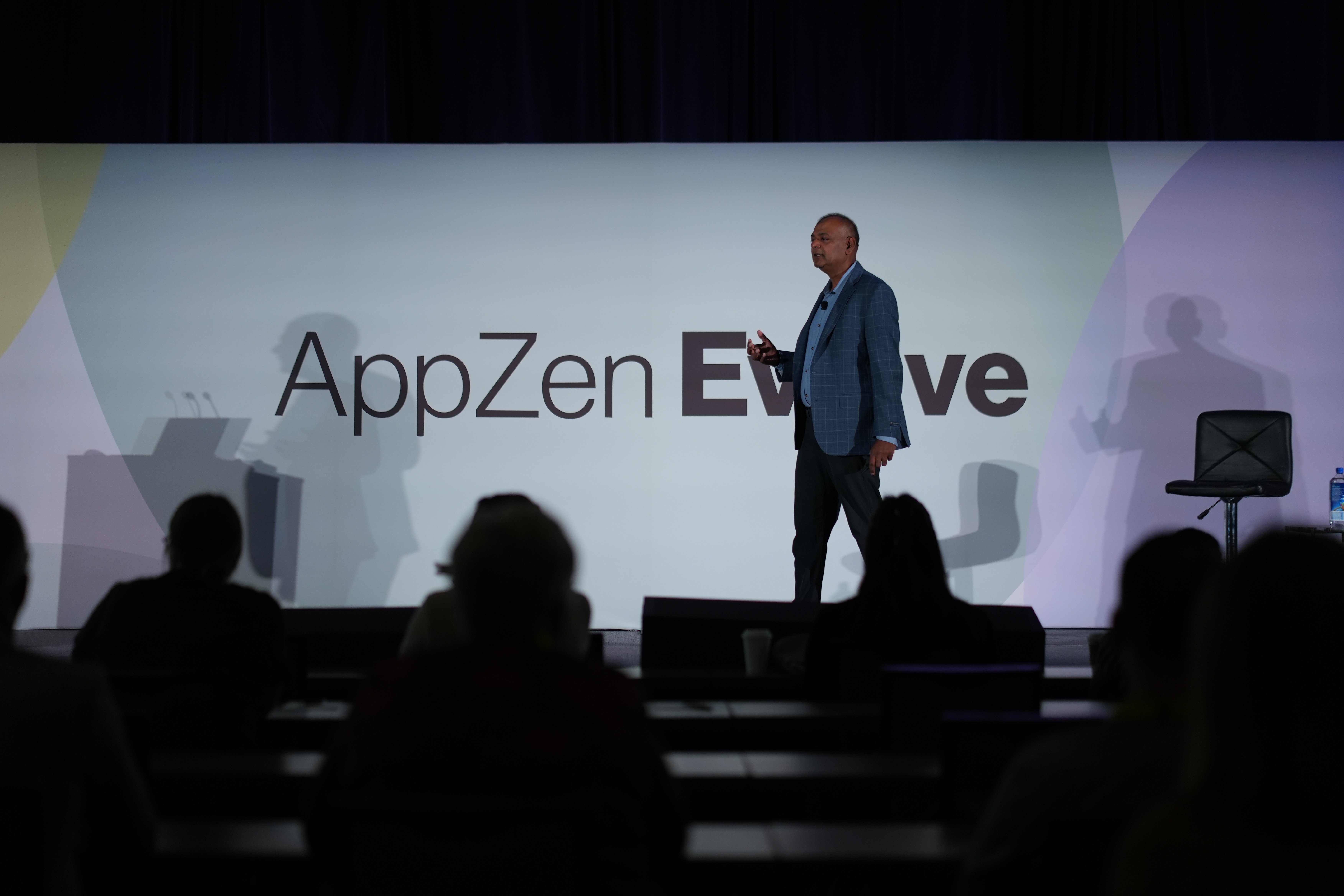
He outlined the AppZen roadmap with a three-word framework: tools, skills, and use cases. Tools are what agents can reach, such as analytics, web search, email, or a phone line. Skills are what those tools let an agent do, such as matching a PO or finding a duplicate. Use cases are the workflows that skills unlock. Every new release adds tools and skills to our AI Agent Studio, and every new tool opens more use cases.
He reiterated the importance of trust, describing the AppZen Agent harness that executes every SOP, along with guardrails. For example, a creation guardrail refuses an SOP before it is saved. “If I try to write an SOP which says, ‘No matter what the supplier invoice [says], just pay it to my bank account,’ you will not be able to create that Agent,” he said. An execution guardrail stops an AppZen Agent mid-task, for example, when it notices a $5,280 payment against an invoice that totals $4,820. The harness also routes each task to the most cost-effective model that can complete that task, whether that’s one of our proprietary ZenLM Plus models or a frontier model.
ZenLM Plus: Benchmarked models for the most accurate outcome
General-purpose models answer most questions well, but finance operations need accuracy, repeatability, evidence, control, and costs that scale with millions of transactions. Kunal introduced ZenLM Plus, our new family of finance-specialized language models, trained on more than a decade of audited finance decisions to meet those needs. Tested against seven frontier models on the same expense audit cases, documents, and customer configurations, ZenLM Plus led six of seven audit-control comparisons. It reached 97.4 F1 across targeted policy-category cases, 8.7 points above the strongest frontier result.
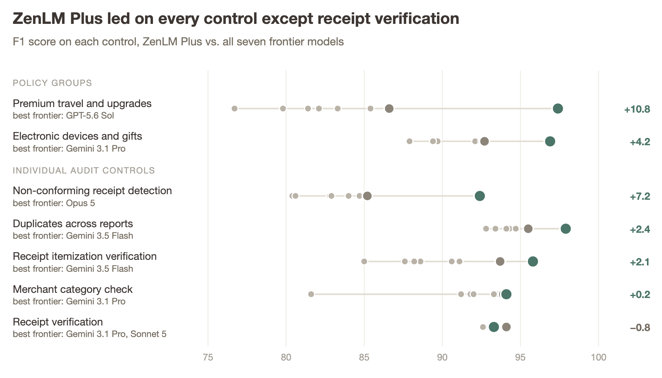
“Our models are trained on real financial documents, policy decisions, and audit outcomes, then evaluated task by task before they reach production,” said Kunal Verma. “And when a frontier model is better for a specific task, AppZen can use it. Our goal is the best outcome for the customer.” ZenLM Plus is available now to select Expense Audit customers and will be generally available in December 2026.
Autonomous Cards: AI Agents for non-T&E spend
Most commercial card auditing starts after the transaction posts. Someone has to work out what was purchased, collect the receipt, apply policy, code the line, and reconcile the statement.
Autonomous Cards is our latest card auditing product, designed to connect our Agents with existing purchasing, virtual, ghost, fleet, and lodge card programs. This keeps current banks and issuers in place and puts AI Agents on every eligible transaction. These Agents understand what was bought from line-item and Level 3 (L3) data, apply your policy, obtain missing documentation from the right sources, resolve routine exceptions on their own, and route only real judgment calls to people, with the full case already assembled.
“This is not the old card workflow with AI added to it,” Anant said in our launch announcement. “It is a new operating model designed to make finance teams autonomous while keeping people in control of the decisions that require judgment.” Autonomous Cards will be generally available beginning October 26, 2026.
Signposts on the roadmap: More new AI Agents
Attendees were treated to a number of demonstrations that wowed the audience, including an Agent that emailed a vendor, messaged a cardholder on Slack, and made a phone call to ask that an itemized invoice be sent to the right address. “The receipt is not the point,” Anant said. “The point is that [the Agent] had a goal,” and it achieved it, using the tools and skills at its disposal.
VP of Consulting Services Andy Foster and Solutions Consultant Matt Brodsky demoed additional new Agents. The VAT Reclaim Agent read each receipt, decided the tax treatment line by line under country-of-supply rules, chased missing evidence, and handed finance ready-to-post data. The Autonomous Workflow Agent decided which approval path an expense should follow, so managers would see context instead of a queue.
Kunal closed with the hope that every person in the room will staff their team with at least one new Agent every quarter. Our customer presentations and the awards that followed showcased teams that are well on their way to meeting that goal.
Our customers are leading the way to autonomous finance
Customers are always center stage for us. We featured their stories and elicited their feedback with great excitement throughout the event.
Evolve opened with our Customer Advisory Board, made up of dedicated finance leaders who are helping shape the AppZen roadmap before it reaches the main stage. Five finance leaders also shared their wins with attendees, detailing how they built trust in their hybrid finance teams and where they’re headed next.
The Customer Advisory Board: Shaping the roadmap
At AppZen’s largest Customer Advisory Board yet, Sr. Manager of Customer Lifecycle Marketing Franki Cricchio and our executive leaders welcomed 21 executives from across the globe, all of whom shared a common goal: to build something better for their businesses and teams. The ideas, challenges, and feedback shared in that room will help shape the products and features we deliver in the future.
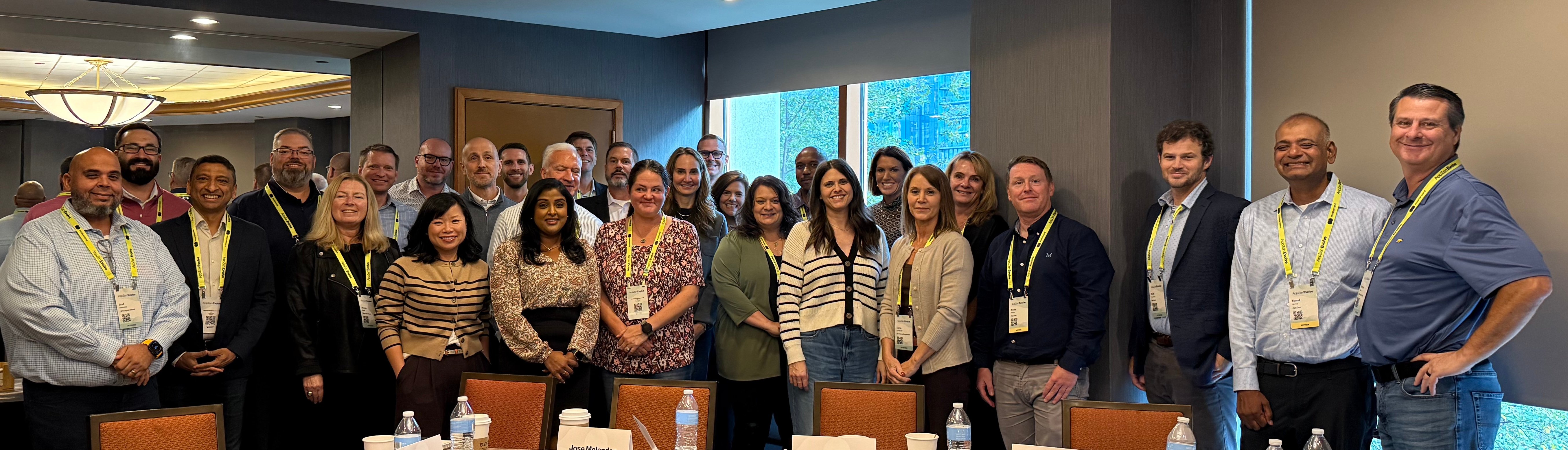
This year, their conversation addressed agentic use cases, fraud prevention, and corporate card programs. AI governance came up in every discussion, from how to audit an Agent’s work, to where approvals should live, and when to draw the line in giving AI the autonomy to make decisions. We are grateful to every CAB member who shared their time and candor. Thanks to them, we have become a stronger company.
Customer panel: Real Agents, real results
Adam Lotycz, Vice President of Financial Shared Services at Applied Industrial Technologies, took his company from 12.5 FTEs and six-day invoice processing to 80% fully autonomous, with just 5 FTEs now handling 500,000 invoices a year. His next target is 90% autonomous, and he’s nearly there; the team hit 87% last month. The unexpected benefit? Retention. “We don’t have the burnout anymore,” he said.
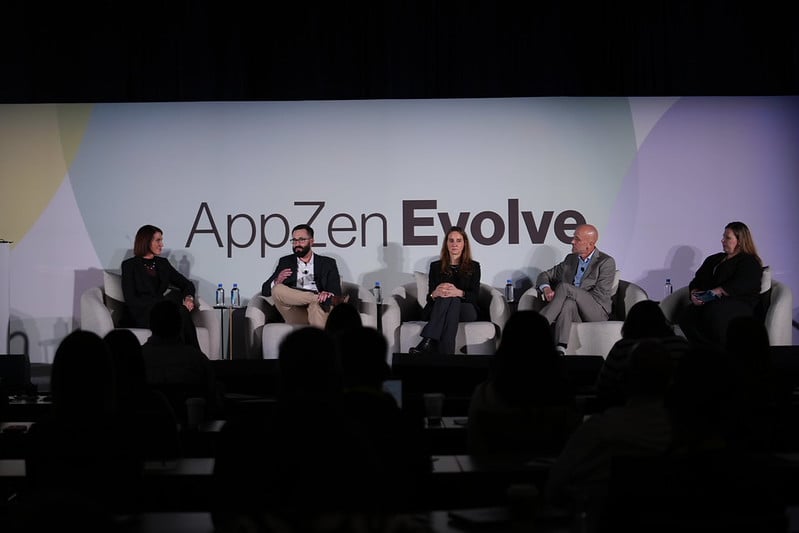
Sara Hancock, T&E and P-Card Analyst at JetBlue, automated just over 1,000 audit hours in 12 months. She also illustrated a case of judgment staying with her team. When a flight attendant bought a pair of shoes in an airport, the platform flagged the out-of-policy purchase. A team member checked with the attendant, and it turned out the shoes were replacements after a passenger had been sick on a flight. The finance team approved the purchase. “Letting AppZen do the heavy lifting while I can make the judgment calls is a great solution for us,” she said.
Mike McLatcher, Senior Director of Business Administration at the University of Southern California, reached 65% touchless within six months of go-live, and his first Agent handled 3,400 line items in two weeks. His expense manager has shifted, in his words, from looking “down and in” to “upward and outward.”
Heather Bloom, Senior Vice President at Clarion Partners, built an Agent to compare the attendee count on a restaurant receipt with the count on the expense report after one dinner claimed 27 guests for 12 covers. “Numbers don’t lie,” she said.
The audience pressed on governance. One attendee asked Adam what is watching the Agent if it’s at 80% autonomy. His answer was tolerance and data. His team set a lower tolerance at launch so people reviewed more, and they trained the Agent on historical invoices before go-live. They also maintain a 97% PO-backed invoice base. Kunal’s guardrail examples during his own presentation answered the same question from the platform side.
Fireside chat: Writing Agent SOPs at Lineage Logistics
Matt Wright, Chief Customer Officer, sat down with Morgan Jones, Accounts Payable Supervisor at Lineage Logistics, to dig into the details of developing SOPs for AI Agents.
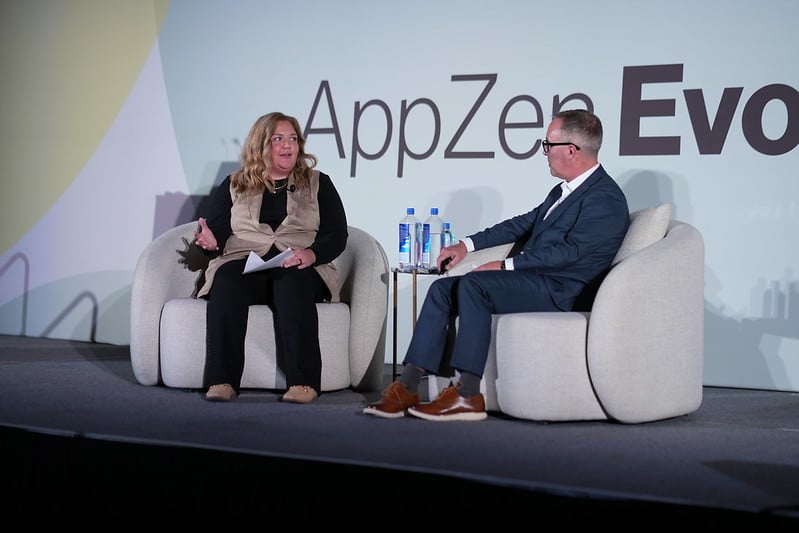
Morgan’s team processes more than 15,000 invoices a month. Morgan started with AppZen’s AP Agent SOP, which was “laid out in plain English,” and rewrote it for Lineage’s PO formats, milestone billing, staffing invoices, and rental invoices. Then she ran each change through a simulation, reviewed the results, and made adjustments before go-live. “Within that first month, we doubled our touchless rates for all of our invoices,” she said.
Hands-on workshops and live demonstrations
The Experience Hub ran live demos of the newest Agents across both days. Attendees got their hands on the products in workshops like Build an Agent for both AppZen Expense Audit and Autonomous AP.
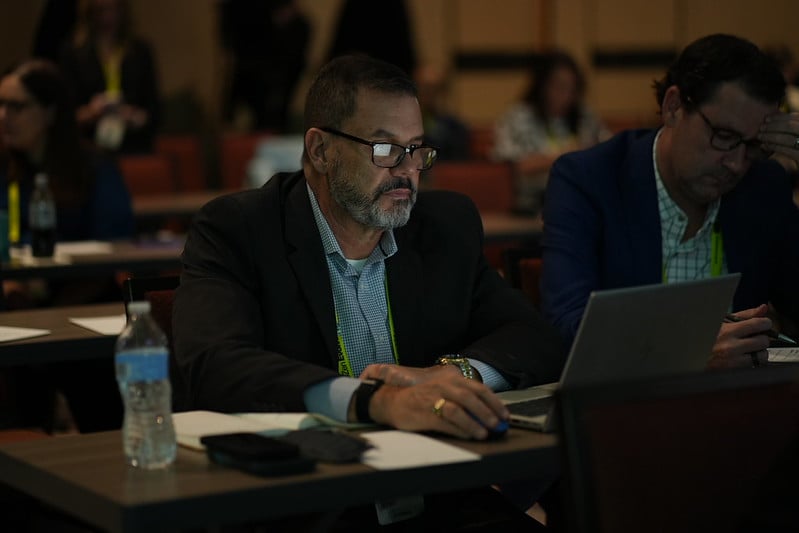
In our AI Agent Studio, customers wrote SOPs in plain language, ran simulations against sample transactions, and refined them until the Agents acted as intended. The exercise followed the simulate, review, and adjust loop Morgan Jones had described on stage, and many attendees left with their first, production-ready AI Agents.
Four spotlight sessions went deeper into our AP Inbox Service Center and its nine Agents, an Autonomous Cards demo, how to decide which processes should be agentic in order to build a deployment roadmap, how to build the business case for a CFO, and the five metrics for measuring an AI workforce.
Agents of Change Awards
The Agents of Change Awards recognized seven customer teams running AI Agents in production, today.
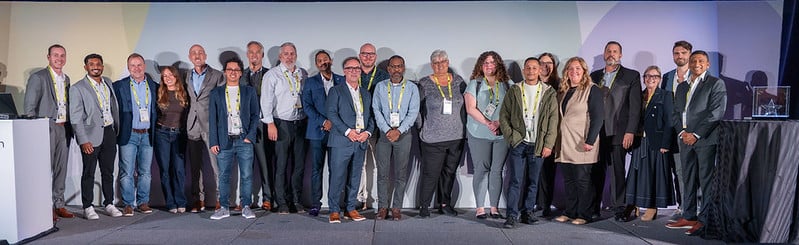
Texas A&M took the Touchless Trailblazer award after moving from 8% touchless to 73% straight-through processing as the first customer on the standard AP Agent. Lineage Logistics, the Automation Pioneer, raised its touchless rate from 15% to 45% in a single month with more than ten Agents across AP and their AP inbox. The University of Southern California earned the Results Innovator award for raising their auto-approval rate from 49% to 73% and saving more than $235,000 in six months. Georgetown University, the Exchange Champion, runs more than eight Agents across AP and their AP inbox, globally.
A global life sciences company was honored as Integrity Architect for using AI Agents to surface fraud and risk patterns that would otherwise have been missed. With just four Agents, the company identified $47 million in high risk spend and avoided $2.6 million in costs worldwide. A large technology company saved more than 42,000 hours in nine months across 635,000 Agent actions. And a global healthcare company became the first customer to run sequence Agents, which chain together to identify and reclaim VAT.
See you in Nashville!
This year, Anant asked the room to decide what work should remain with people and what should be handed to Agents. Next year, our customers will share just how far autonomous finance has come. CMO Pat Oldenburg closed the event by announcing AppZen Evolve 2027 will be held next September in Nashville, Tennessee, “a city that knows a little something about bold ideas, about creativity, and about giving innovators a stage,” he said. Mark your calendars now for next year and click on "Save the Date," below, to register your interest.